

When to define a data product
Not all tasks and datasets are critical to business needs or internal teams, so it pays to be deliberate when creating data products. Consider creating a data product when the end result of one or more pipelines:- Is crucial for business operations, decision-making, or compliance.
- Is depended on by multiple teams or external partners.
- Involves complex processes or multiple sources.
- Is subject to regulatory requirements (GDPR, HIPAA).
- Contains or touches sensitive data such as customer data or PII.
- Is required to be available at a particular time.
Examples
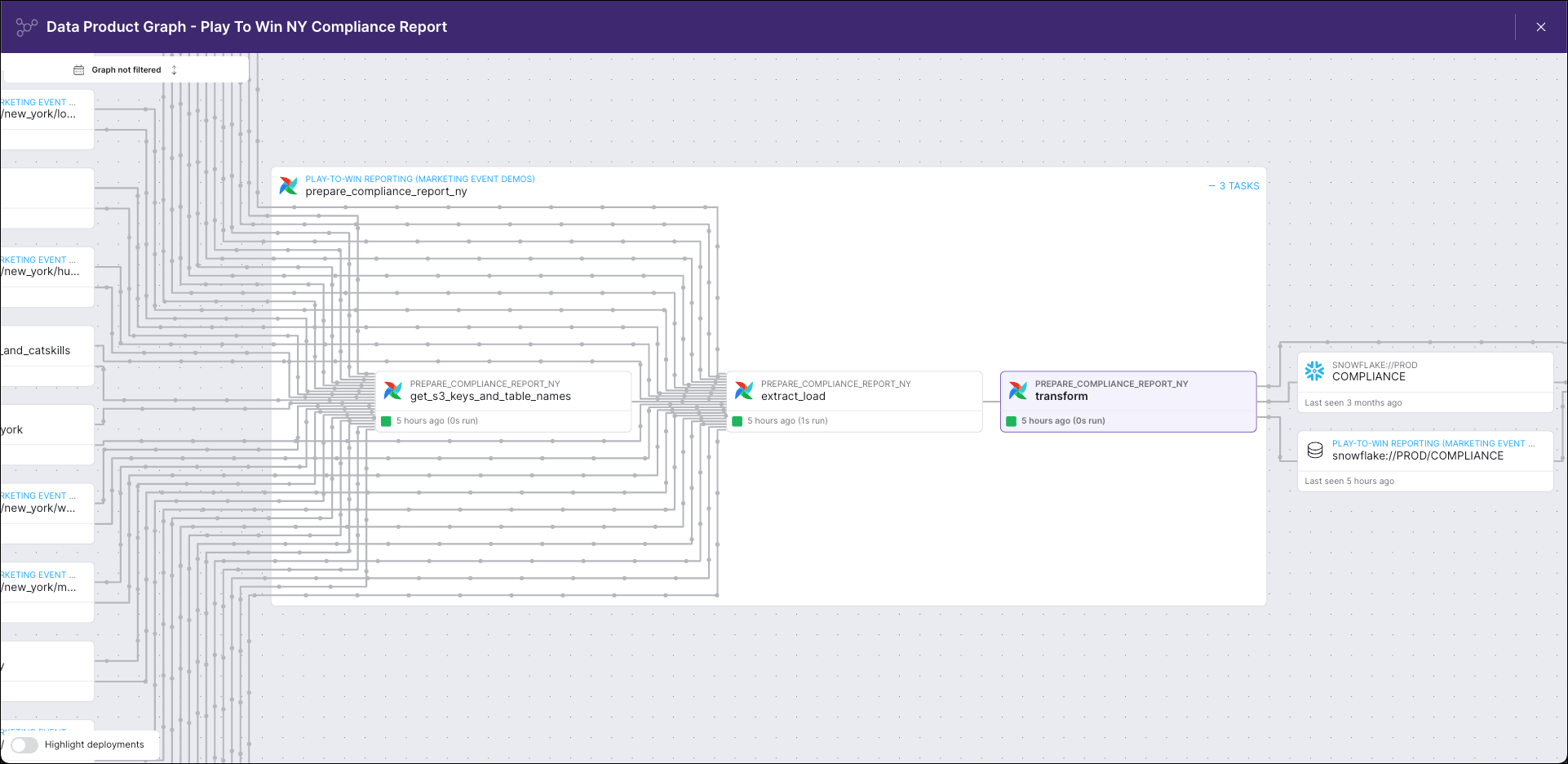
Defining a data product makes particular sense when business-critical data is involved, multiple teams touch the pipeline, and on-time delivery and reliability of the data are of primary importance. For example, you might want to use a data product if your organization manages regulatory data coming from different departments, produced by multiple teams, and the data feeds a crucial compliance report. Creating a data product for these critical assets enables visualization and monitoring of the flow of data through the distributed tasks that generate and modify the tables.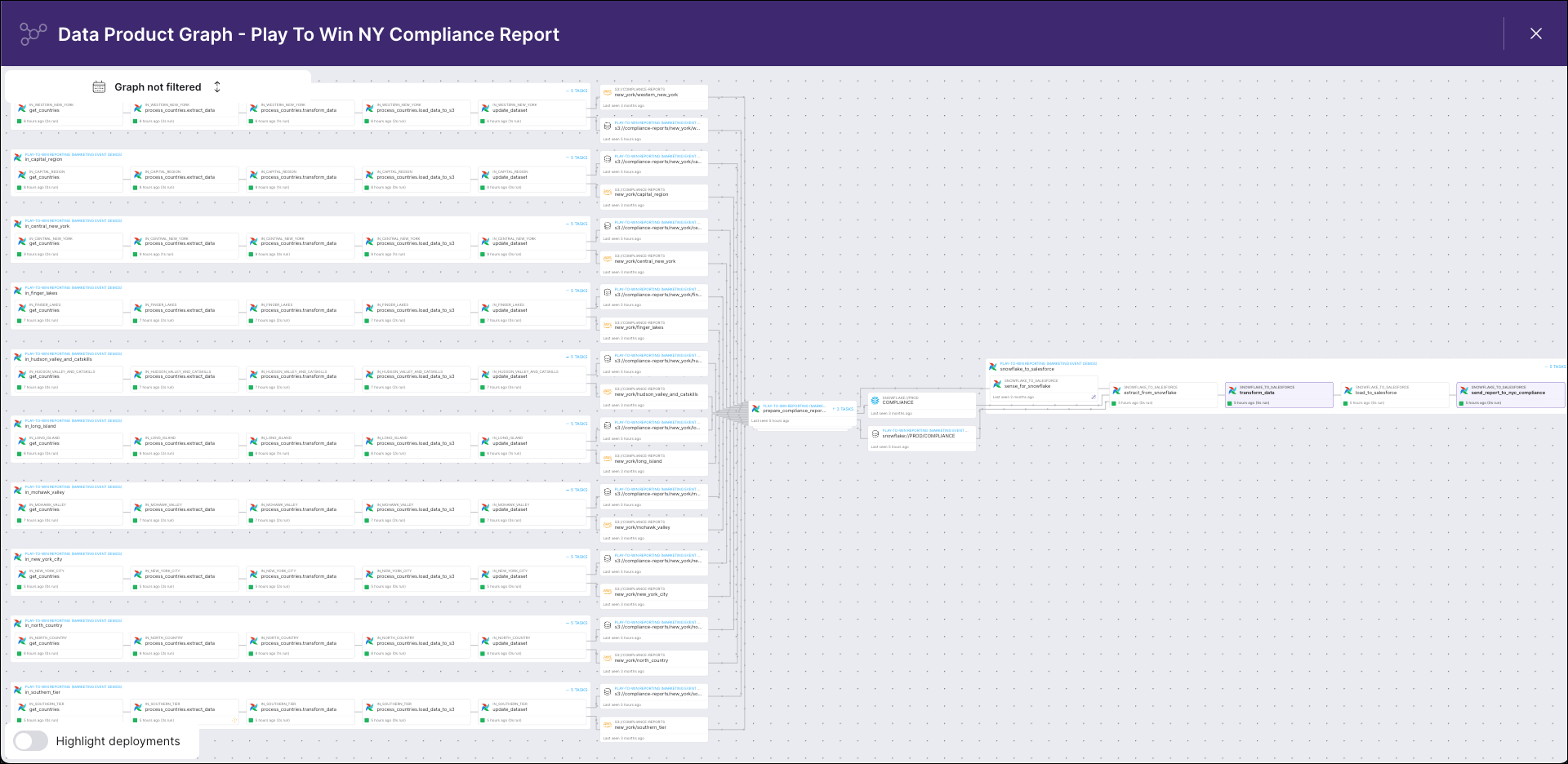
- A table used by multiple teams to generate executive dashboards.
- A table containing customer data accessed by multiple teams in your organization.
- For objects created by a single task with no upstream or downstream dependencies.
- For a table with non-critical or non-sensitive data in a sandbox that is used only occasionally.